Tattoo guides
Tattoo Aftercare Basics
Follow the instructions for your specific dressing, keep care gentle, and seek medical help for worsening symptoms. A fixed day-by-day schedule does not suit every tattoo.
Start with your own care plan
Before leaving the studio, ask for written instructions that name the dressing used and explain when to remove or change it. Keep the studio contact details and the product instructions together. If two instructions conflict, ask for clarification rather than combining different internet routines.
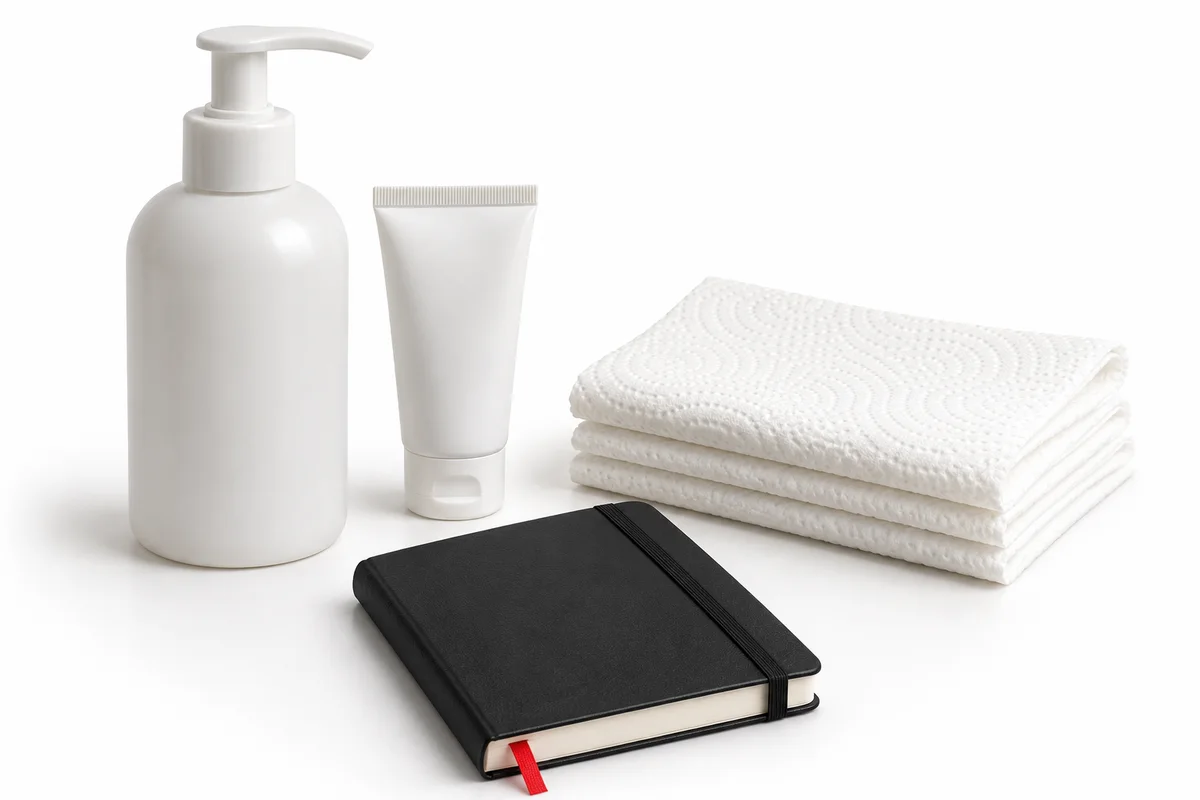
This is general information, not a diagnosis or an individual treatment plan. A clinician should assess symptoms, allergies or conditions that affect healing. The cover image is an illustration, not a recommended product kit.
Keep cleaning gentle
Wash your hands before touching the area. Gently clean with water and a small amount of soap or a soap substitute, rinse, then pat dry with clean disposable paper or a fresh towel. Do not scrub, scratch or pull off peeling skin. These principles are covered in the EADV aftercare leaflet.
Dressings and products
Bandages differ: do not use one removal time for every product. Follow your professional instructions, and ask what to do if the dressing leaks or irritates the skin. Use appropriate aftercare products as directed, without a thick build-up. Routine disinfectants or antibiotic creams are not needed; infection requires medical evaluation. See EADV guidance.
Write down the names of anything applied, especially if you have known allergies. Do not experiment with several new products at once or use a product merely because it appears in a tattoo photo.
Plan around healing
Avoid swimming, soaking and saunas until healed, and avoid clothing or activities that cause friction and irritation. Showering is different from soaking. Protect the area from sunlight with suitable clothing. EADV advises sunscreen only after complete healing; for healed tattoos, the American Academy of Dermatology recommends broad-spectrum, water-resistant SPF 30 or higher.
Tell the artist about upcoming travel, swimming, work clothing or sports before booking. Moving the appointment may be easier than trying to fit healing around a fixed event.
When to seek medical help
Redness that spreads or darkens, worsening pain, pus, open sores, fever or chills warrant prompt medical attention. Do not wait for an artist to diagnose a possible infection. Difficulty breathing, chest tightness, dizziness or widespread hives after a reaction need immediate medical care. The AAD guide to tattoo reactions explains these warning signs.
If you are unsure whether symptoms are improving, contact a healthcare professional. A photo or an online comment cannot reliably rule out a complication.
Questions to take home
- What dressing is on my tattoo, and what are its removal instructions?
- Which product should I use, and how much?
- What should I do if the adhesive or product causes irritation?
- Which work or exercise activities should I postpone?
- Who should I contact for a routine question, and when should I seek medical care?
Still planning your appointment? Read the first tattoo guide and budget checklist.
Sources and editorial note
Sources checked 19 November 2026. This is an editorial guide, not individual medical or legal advice. No clinician review is claimed. Studio references illustrate one provider's approach, not an endorsement or universal policy.
Common questions
When should I remove the bandage?
Use the instructions for the dressing your artist applied. There is no single removal time for every bandage; ask the studio if the instructions are unclear.
Can I swim if the tattoo looks better?
Wait until it is healed, not merely less red. Discuss uncertainty about healing with a qualified professional.
Should I use antibiotic cream just in case?
No routine antibiotic cream is needed. If you suspect infection, seek medical evaluation rather than treating it yourself.